by Mike McEvoy, PhD, NRP, RN, CCRN | Apr 19, 2019 | Articles, Featured Articles
Shortness of breath, or dyspnea, results from air hunger, a sensation that you’re not getting enough air. Here’s how to spot a patient with increased work of breathing, an important assessment for an EMS provider evaluating a patient with dyspnea.
by Joseph P. Hopple, NRP | Apr 5, 2019 | Articles, Featured Articles
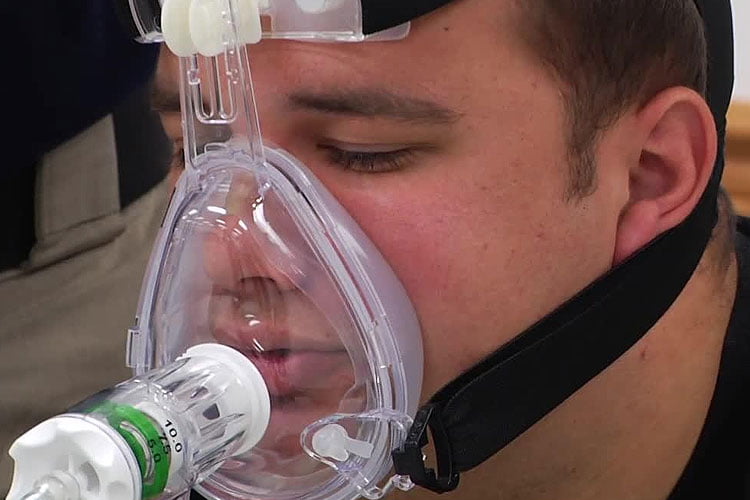
On the go? Listen to the article in the player below! When applying a device to deliver noninvasive ventilation (e.g., CPAP or BiPAP) to a patient, many providers forget to pay attention to one of the most critical aspects of using these lifesaving devices: the mask...
by Dennis Edgerly, MEd, EMT-P | Mar 29, 2019 | Articles, Featured Articles
Thorough Assessment is Crucial in Patients with Respiratory Distress By Dennis Edgerly A 48-year-old male sits in his bedroom, sitting up and leaning forward. As you approach him, he tells you he can’t catch his breath. He’s in obvious distress, but is able to tell...
by admin | Jan 30, 2019 | Articles
By Dennis Edgerly, EMT-P | Paramedic Education Coordinator
As you enter the house your patient looks at you anxiously. He’s sitting upright, leaning forward. You note circumoral cyanosis and obvious respiratory distress as he attempts to speak. As you approach, you place him on oxygen with no relief. Upon auscultation of his chest, you note wheezing throughout his lung fields. You and your partner begin to administer a common bronchodilator albuterol when you remember — all that wheezes is not asthma.
by Andrew Merelman, BS, NRP, FP-C and Richard Levitan, MD, FACEP | Nov 14, 2018 | Articles, Featured Articles
By Andrew Merelman, BS, NRP, FP-C , Richard Levitan, MD, FACEP
You arrive on scene and find a 68-year-old man is lying on the couch with difficulty breathing. He’s obese and obtunded, with severe respiratory distress. His wife tells you he has a history of congestive heart failure. He appears pale and diaphoretic, with snoring, slow, shallow breaths and his initial oxygen saturation is 72%. What are the most important first steps in managing his airway and breathing?
by admin | Nov 13, 2018 | Articles
By Keith Widmeier, BA, NRP, FP C
A difficult airway is one in which the EMS provider identifies potential attributes of the patient that would make it difficult to utilize a bag-valve mask (BVM), insert an extraglottic airway, perform a laryngoscopy, and/or perform surgical airway interventions. It’s the ability to appropriately assess the patient’s airway that allows providers to predict which will be difficult, optimize their first attempt and ensure the highest likelihood of success when managing a patient’s airway. Thorough airway assessments help drive your clinical decision-making and help determine the tools you choose to wield when managing a particular airway.
Recent Comments