
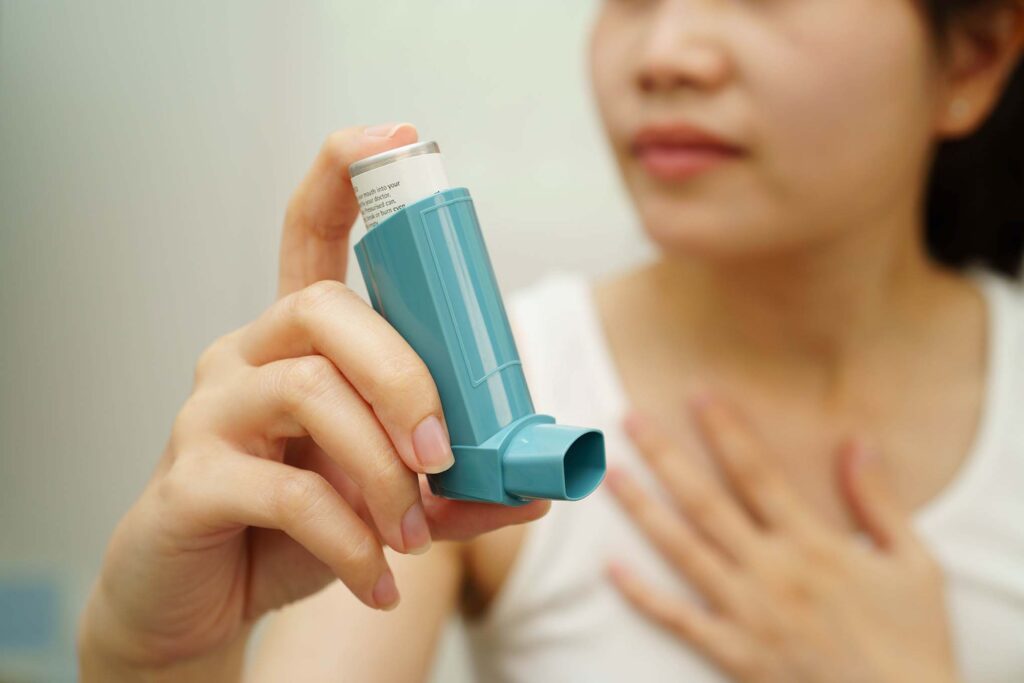
Shutterstock/superbeststock
When we went through school, both EMT and paramedic (and beyond in some cases), we were taught COPD patients were either “blue bloaters” or “pink puffers.” I can still see the dry slides with two boxes that contained a list of symptoms “specific” to each categorization. This was usually accompanied by the images of a thin, barrel-chested man, blowing air through pursed lips; and the image of a thicker, huskier built man coughing up schmutz.
I have spent my whole career in search of patients who meet those descriptions, and I have yet to have met a single one. The reality, as we have all learned since school, is that COPD patients are heterogenous— meaning they are all different. They exist along a spectrum of the disease and the assessment and management is rather nuanced.
The differentiation is meant to identify what the “primary” disease process is affecting the patient. The reality is that COPD patients live along a spectrum of disease that includes bronchitis, emphysema, and asthma (in some cases).
In reality, you are not going to “fix” these problems in the field, or ever. Prehospital management is designed to unload the respiratory muscles and reduce the work of breathing so that they can return to a baseline of work of breathing, ventilation, and oxygenation. But…. there is a catch.
An Upgraded Understanding of COPD
While we often see a blend of “puffer” and “bloater” physiology, it is somewhat helpful to know what the dominant pathology is so that we can provide the most personalized and precise treatments sooner rather than later.1-4 If they are predominantly suffering from emphysema then we know that the patient has lost elasticity of the lung tissue and has a problem with hyperinflation (perhaps NIV should be prioritized over other treatments).4
The patient with bronchitis as their primary problem has to overcome high airway resistance and mucus production in order to move air in and out of their chest (pharmacotherapy is key for this patient).1,3-4
Here are the knowledge upgrades I wish I had earlier in my career:
Inflammation: inflammation is the harbinger of obstructive lung disease. Whatever the cause may be (environmental exposures, smoking, etc.), lung tissues (specifically cilia and squamous cells) are damaged or destroyed. Cilia disappears and the squamous cells become thicker and begin over producing mucus. Without cilia, there is nothing to mobilize secretions or mucus so that it can be expelled via coughing. This leads to mucus plugs in the small airways. As squamous cells become thicker, the airways become narrower, impairing air movement throughout the lungs. This inflammation is not temporary, it is constant, and the damage it causes is ongoing.1-4
Alveolar Wall Destruction: This occurs secondary to chronic hyperinflation of the alveoli. Narrower airways means less efficient and incomplete emptying of the alveoli during ventilation. The result is a predictable rupturing of the alveolar walls, creating large areas of lung with consolidated and floppy pockets of alveoli. The floppy nature of these lung units is a cause of expiratory flow restriction and “air trapping.” 1-4
Lifestyles of the Sick and the Breathless
They are not going to give up the dog or the cats. They are not going to make their spouse stop smoking, much less in the house. They will not wear their CPAP at night (or for naps) because it is not comfortable.
Maybe they will get a flu shot, maybe they won’t. They will continue to take their oxygen off and exert themselves by walking to the mailbox and back without it… and be shocked that by the time they get back to the house, they are breathless and hypoxic.
I make this point to say that prehospital clinicians often encounter these patients who manage the disease poorly.
Here are some other themes to keep in mind when treating the COPD patient.
COPD is Graded
The Global Initiative for Obstructive Lung Disease (GOLD) criteria classifies COPD patients based on the severity of symptoms and exacerbation history. There are three categories: A, B, and E.5 Some patients may know this while others may not understand what their doctor has told them and therefore cannot articulate it back to you.5 The classification is necessary to understand their medication therapy, and the severity of their disease.
Important to note is that COPD patients do not go back to their baseline after an exacerbation. For example, in one study, patients were found to lose 36-40mL’s of lung volume each year.5
That is only for patients with two or three exacerbations each year. In patients with three or more exacerbations per year, their volume loss is predictably much higher.5 For those who can tolerate pulmonary rehab, their ability to recover is much better than those with little tolerance for exercise or pulmonary rehab.5
“I don’t understand why these meds don’t work!”
The reality is that a large number of COPD patients have poor inhaler technique, and therefore there is poor drug delivery. In one case that I recently managed, the patient was using their once-a-day LABA/LAMA medication as their “rescue” or “as needed” inhaler.
They don’t wear their CPAP at night or during naps. They take their oxygen off until they “feel like they need it.” They smoke or vape, or their spouse still smokes/vapes. Pet dander and environmental allergens can also trigger an exacerbation.
Further exacerbating the issue (see what I did there), is the economic impact of exacerbations. 90% of the cost associated with COPD comes from hospitalizations and the costs of medications.5
Combination inhalers can be incredibly expensive, but they are essential to the management of the COPD patient. Primary care physicians and pulmonologists use the GOLD criteria to prescribe patients the combination of medications that fit their symptoms/exacerbation history.3
Some are simply combinations of long-acting beta agonists (LABA) and long-acting muscarinic agonist (LAMA), while others are a LAMA/LABA combination with the addition of inhaled corticosteroids (ICS).3 They are prescribed these in addition to an “as-needed” or rescue inhaler, which is most often albuterol.3
Biologics are gaining evidentiary support and are becoming more prevalent in the chronic management of COPD.3 Medications like Dupixent are injectable medications that target specific inflammatory types.3
They work by inhibiting the action of the target inflammatory mediator and therefore reduce exacerbation frequency, intensity, and improve lung function to a degree.3 Affordability is the greatest barrier to their widespread implementation.
In Practice
Inflammation, architectural remodeling, alveolar wall destruction, and floppy, super-compliant lungs are what we are up against. COPD is heterogenous and patients do not present the same way every time.
Our focus is on reducing the work of breathing and the improvement of airflow into, and more importantly, out of the lungs. Even as the chronic disease management strategy of COPD has evolved, the prehospital care plan remains largely unchanged. Short acting beta agonists and cholinergic medications are a cornerstone of management as is CPAP/BiPAP.3 Used in conjunction, we can stabilize a patient and potentially stave off intubation. Understanding COPD in this manner has me reaching for ventilatory support much sooner instead of waiting for the patient’s condition to require an escalation to it.
Do not chase wheezing. These patients wheeze all day every day, and using a reduction in wheezing as a target for therapy may have you chasing your tail. Instead, focus on their work of breathing.
Improvement in their respiratory effort is our indicator that we are moving the needle in the right direction. Confirm this with changes in their ETCo2/Spo2, which may still be slow to normalize.
Take Home
So, maybe this is not that much of a different perspective on puffer and bloater presentations, but the point is to understand that COPD patients do not fit neatly into any box of descriptions.
Their presentations can change from exacerbation to exacerbation, and they will respond differently to our therapies. Patience is the key; they do not turn around quickly.
References
1. Sköld CM. Remodeling in asthma and COPD–differences and similarities. Clin Respir J. 2010;4 Suppl 1:20-27. doi:10.1111/j.1752-699X.2010.00193.x
2. Jeffery PK. Remodeling in asthma and chronic obstructive lung disease. Am J Respir Crit Care Med. 2001;164(10 Pt 2):S28-38. doi:10.1164/ajrccm.164.supplement_2.2106061
3. Gomes F, Cheng SL. Pathophysiology, Therapeutic Targets, and Future Therapeutic Alternatives in COPD: Focus on the Importance of the Cholinergic System. Biomolecules. 2023 Mar 5;13(3):476. doi: 10.3390/biom13030476. PMID: 36979411; PMCID: PMC10046140.
4. MacIntyre NR. Acute Hypercapnic Respiratory Failure in COPD. Respir Care. 2023;68(7):973-982. doi:10.4187/respcare.10560
5. Anzueto A. Impact of exacerbations on COPD. Eur Respir Rev. 2010 Jun;19(116):113-8. doi: 10.1183/09059180.00002610. PMID: 20956179; PMCID: PMC9682573.

Cody Winniford is a flight paramedic and base manager in Baltimore, MD. He has a passion for sharing his professional experience in EMS and management. Cody’s clinical and leadership development background spans both military and civilian settings and has served in several capacities as a leader and prehospital clinician. He specializes in air medical and critical care transport, as well as organizational development and leadership development. He is an active speaker on various leadership and clinical topics and is an established and successful educator for prehospital clinicians of all levels. He has a passion for human performance improvement and the mental health and performance aspects of prehospital care.
