
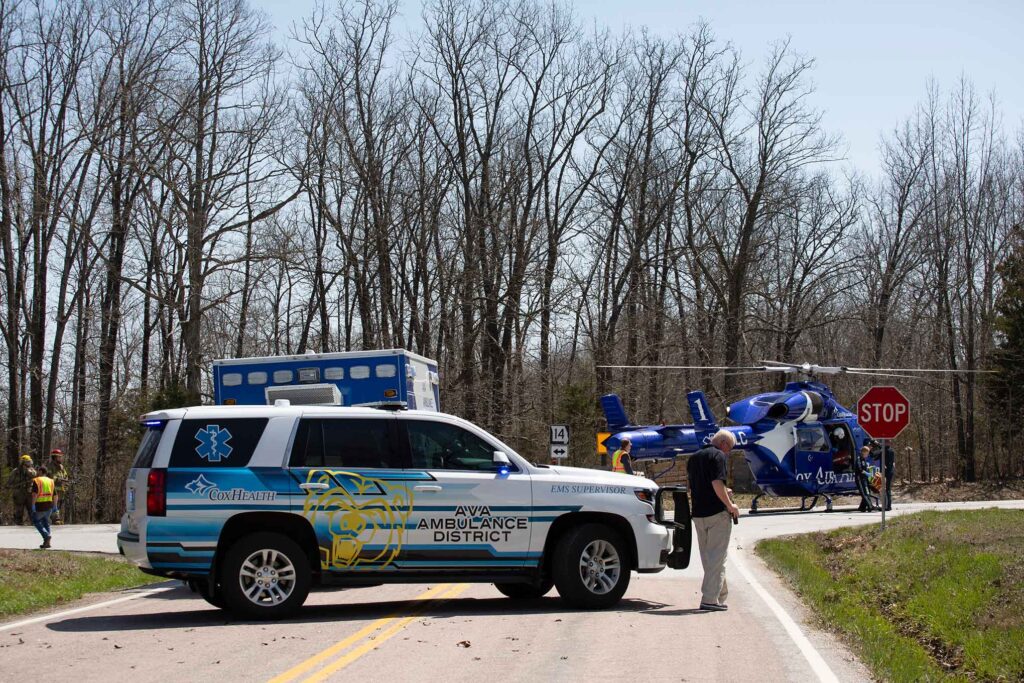
Shutterstock/CJ Hanevy
By Gregory M. Proctor
The Edge Between Distress and Failure
There’s a moment in every respiratory call where the patient’s effort stops compensating—and collapse is seconds away. You can hear it in the shallow grunting, see it in the sweat glistening across their forehead, and feel it in the tension of the room. That thin line between respiratory distress and respiratory failure is where prehospital providers earn their reputation.
As flight and critical care clinicians or rural 911 paramedics who are +30 minutes from a hospital, we live in that gray zone. The airway isn’t just anatomy, it’s physiology in motion, and knowing how to recognize early signs of deterioration can mean the difference between a save and a fatal spiral.1
Reading the Signs: What the Body is Trying to Tell You
Respiratory distress is the body’s SOS. It’s the tug-of-war between oxygen delivery and carbon dioxide removal. Subtle cues become life-saving diagnostics:
Tachypnea–The patient’s first silent alarm. Defined as a respiratory rate > 20 breaths per minute.
Color changes–Cyanosis around the mouth or fingertips means oxygen reserves are running out.
Grunting–An attempt at self-PEEP, working to prevent small airways from collapsing.
Nasal flaring and retractions–Muscles working overtime to draw in air.
Sweating–Cool, clammy sheen as catecholamines flood the system and cause peripheral vasoconstriction.
These are not benign findings. Each is the body’s compensation mechanism—and when they begin to fail, the patient is on a fast track to respiratory collapse.
As I remind my teammates, if our patient is tripoding upon our arrival, we’re already behind the curve.
Distress: The Window of Opportunity
Respiratory distress is often reversible—but only if caught early. Whether it’s asthma, pneumonia, toxic inhalation, or sepsis, the approach remains the same: oxygenate, ventilate, and identify the underlying cause.1,2
CPAP or BiPAP can often bridge the gap between support and intubation, buying critical time during transport. But this requires situational awareness—knowing your distance to definitive care, the patient’s tolerance, and your protocols.
Sepsis, for example, isn’t just an infection, it’s a form of shock. The combination of tachycardia, tachypnea, and hypotension signals failing perfusion. These patients need high-flow O₂, fluids, and vasopressors, but they also need you to recognize what’s really happening: their lungs are no longer just the problem—they’re the battlefield.2
Failure: When Compensation Crashes
Respiratory failure occurs when the body’s compensatory mechanisms are overwhelmed by the level of pathophysiology. The alveoli collapse or flood with fluid, gas exchange stops, and hypoxia takes control.1
Two main types are encountered in the field:
Hypoxemic Respiratory Failure–Too little oxygen in the blood.
Hypercapnic Respiratory Failure–Too much carbon dioxide inside the blood.
These two forms of respiratory failure can be isolated or coexist, and both are killers if missed. Your hypoxemic patient presents restless, anxious, cyanotic, and maybe even combative. Your hypercapnic patient looks different, confused, drowsy, and slipping away quietly.
Altered mental status (either agitation and combativeness or somnolence and confusion) should be a clue to rapidly examine the patient’s respiratory status to figure out if it is contributing to the patient’s presentation.1,2
That’s why understanding this progression isn’t just academic, it’s operational. Recognizing failure before it declares itself is how you stay ahead of the curve.
Treatment Pearls: Staying Ahead of the Curve
Once failure begins, it’s time to act fast:
Support the ABCs with early and appropriate airway management.
Optimize oxygenation—Preoxygenate, position, and prepare for the inevitable.
Control hemodynamics—Maintain perfusion with fluids or vasopressors as needed.
Avoid over-resuscitation—Fluid overload worsens pulmonary edema and hastens the development of Acute Respiratory Distress Syndrome (ARDS).1,2
Treat the cause—Infection, obstruction, trauma, overdose, or metabolic derangement.
Remember, every intervention should be guided by the question: “Can this patient maintain their own airway for the next five minutes?” If the answer’s no, you already know your path.
Field Reflection: Lessons Learned in the Air
After two decades in EMS and flight medicine, I’ve come to see respiratory distress calls as a microcosm of prehospital care—where assessment, anticipation, and action intersect.
Grunting isn’t cute, it’s a red flag.
Tripoding means you’ve got minutes, not hours.
Scene safety always comes first—sepsis, toxins, and trauma don’t discriminate.
In the chaos of the field, don’t let familiarity dull your vigilance. Respiratory distress may look routine, but routine kills.
Conclusion: Act Early, Think Ahead
The progression from distress to failure doesn’t happen in an instant, but your window to intervene does.
The art of airway management is not just about intubating a patient, but also about knowing when not to wait, or getting ahead of the curve with CPAP/BiPAP or high-flow O2, and appropriate pharmacological management.
Recognize early distress, anticipate failure, and move decisively. In-flight medicine and ground transport, seconds matter, and your patient’s next breath might depend on your last decision.
About the Author
Gregory M. Proctor is a part-time flight paramedic with Survival Flight Air Ambulance Company and a full-time medical student. He is originally from Washington, D.C. and has been involved with fire/EMS and critical care transport since 1997. His fire department responded to the 9/11 Pentagon Attacks, and he entered military service as a firefighter.
References
1. Hope, A. A., Adeoye, O., Chuang, E. H., Hsieh, S. J., Gershengorn, H. B., & Gong, M. N. (2018). Pre-hospital frailty and hospital outcomes in adults with acute respiratory failure requiring mechanical ventilation. Journal of critical care, 44, 212-216.
2. Jouffroy, R., Saade, A., Muret, A., Philippe, P., Michaloux, M., Carli, P., & Vivien, B. (2018). Fluid resuscitation in pre-hospital management of septic shock. The American Journal of Emergency Medicine, 36(10), 1754-1758.
Exclusive feature content from thought leaders in airway management.
