
II have come to understand two important things about clinical management as it pertains to the way organizations handle their airway management programs:
- An organization does not rise to the level of its aspirations; it falls to the level of its systems.
- Great organizations have great systems, and those systems require great leadership.
Yet knowing these facts, I find that prehospital medicine is still chasing the discovery of the silver bullet that will revolutionize the procedures and outcomes for airway management. In fact, last year (2025) there were 4,512 papers published on airway management. The study subjects ranged from pediatrics, cardiac arrests, and AI. 52 papers were dedicated to ketamine use for airway management. There were another 200 studies on video laryngoscopy or direct laryngoscopy. Still the silver bullet eludes us. We are obsessed with the process, and we are continually refining it and reinventing it, but are we missing something?
The processes are not the silver bullet, unless they exist within a system that is well led. A system that is well led will always outperform a team with a magazine full of silver bullets.
Process = Outcome: A Broken Equation
This is the thought that if the process is tight enough and it is laid out well enough that the outcome is guaranteed. The problem is that you can only engineer an outcome for a process that is not just well designed, but it has to be well led. Being well led means that the environment and the conditions are present that enable the success we are looking for.
The process can only work to the extent that the environment it is deployed in will allow. For clarity, the environment does not refer to the austerity of the prehospital scene, it refers to the system which governs the process. Why is the environment so important? The environment drives the behaviors that generate the results that the patient needs. This is the correct equation:
Environment + Process = Outcome
For the math to work, it has to exist within a system that enables it. An organization does not rise to the level of its aspirations; it falls to the level of its systems.
The Systems Approach
In 2014 I came across a paper by Col. Robert Mabry MD that outlined the various challenges that the military was facing to increase survival on the battlefield.1 Those challenges, which were the headings of each section of the article, each became the building blocks for a system of clinical management for my organization.1 For the remainder of this piece, we are going to focus on how to implement this system into our airway management programs.
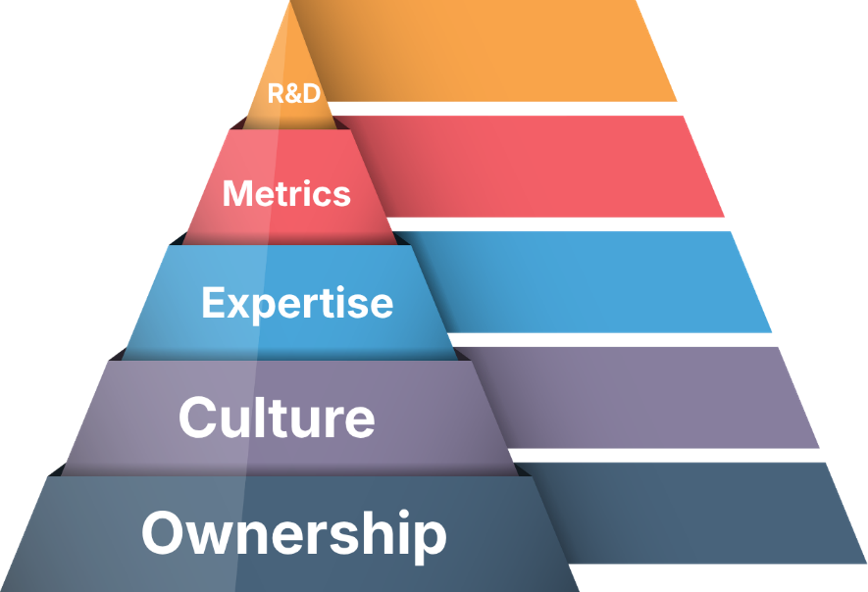
Image created by the author.
The Environment
Ownership
Who owns airway management in your system? Does everything stop at the medical director? Does your system use more of a clinical governance design for its clinical system? Is the training division really driving things? It seems like a lot of superfluous questions, but the idea is to ask them to nail down who the owner is for the airway management system. When ownership is diffused to different sections and people within the organization, no one is actually driving toward the result we need. A common problem when there is no real ownership is that everyone points at someone else when there is an organizational drift away from the process. That finger pointing is for both fault and who is tasked to fix it.
Ownership, or the person responsible for the program, is the system’s anchor. They are collecting the data, trending the data, and reporting it in a manner that supports the culture and drives toward the results. One message to all of the stakeholders works better than all of the stakeholders attempting to create one message.
Culture
Culture is not something we typically talk about when we talk about airway management. It speaks to the attitude the organization has toward the procedure. Over the years I have seen cultures/attitudes range from “we get that tube no matter how many tries;” to an almost cult-like “this is the only way to do it”; and in between systems where people tend to think that one simple detail is what defines success in airway management like “your attempt can only be 30 seconds.” These attitudes drive behavior. Culture is who is really in charge at the patient’s side when the leaders are not there.2-3
To define the culture or the attitude of the organization, ask “what do we believe about airway management?” Why? Because what you believe about something determines how you drive behaviors, and those behaviors dictates the results we can achieve.2 Leaders establish what the beliefs are, and then watch as the behaviors follow. There is probably a discussion here on how leaders handle it when the behaviors do not follow, but that is a blog for another day.
An example applied to our organizations, if we believe that peri-intubation hypotension has devastating adverse events associated with it, then we instinctively prioritize the interventions necessary to deal with it.
The Process
Expertise
This building block is where the training program lives and officially moves the system into the realm of process. Expertise is about the training and development of skill and clinical decision making in airway management.4 True professional development for this procedure is more than quarterly training and protocol review. These should be replaced with debriefs and objective video reviews (with a rubric) that target mechanics and techniques that enable success in the procedure (or not).4
Once paramedics and other prehospital clinicians complete their initial training, the “fred the head” airway models should never be seen again. Instead, cadaveric tissue training, simulation, and high-fidelity airway models that behave like human tissue should be the mainstays of skills training and practice. At all costs, reject impractical and inappropriate positioning drills and intubation stunts that only amount to “range theatrics” for skills practice and acquisition.4 Deliberate and contextually relevant practice is the key to expertise development.
Metrics
Many organizations, like mine did, can get lost in the metrics and try to measure everything in an attempt to micromanage each stage of the procedure. The belief is that if we scrutinize every single aspect of the procedure (in lieu of training as described above), this will inevitably improve the system’s results. This will not prove to be accurate. Micromanagement to meet metrics will almost assuredly result in work arounds and oscillations between good and sub optimal performance. Micromanagement is far cheaper than training; however, it is simply inadequate to move the needle of performance.
Organizations can underestimate the monumental effort required to move the needle by just 1%. In a fully mature system with experienced staff, tools are top-shelf, and the QI program is really dialed in; gains are realized in fractions of a percent. By contrast, an organization launching a new clinical management system or fielding RSI for the first time will see dramatic leaps in performance as early maturity takes hold.
Meaningful measures like DASH-1A, first pass success, etc. are all important markers of performance in airway management. Organizations should strive to meet them to the greatest extent possible. Sometimes meeting the metric is not possible, therefore organizations have to build systems and measures that are fault tolerant to the degree that they can account for operational nuance but not allow for unnecessary drift.
The Outcome
R&D
Research and Development is where innovation and novel approaches can emerge and shape clinical practice beyond your own organization. This is tough to do in medicine in general and even more so in the prehospital arena. Identifying areas of interest (“how are we doing”) and influence (“what could we change”) in the organization’s performance and studying them can yield meaningful results not just for your organization, but the industry as a whole. Your R&D can change the industry, and I firmly believe that we should share and adapt the best practices to our teams. But we can only do that if we do the studies and publish the data. This part of the system is an outward focus on how we can influence the body of evidence surrounding prehospital airway management.
Some examples of interesting questions you can ask your data and share:
- How does the transport environment affect operations and clinical decisions?
- How do you stabilize hemodynamics prior to RSI?
- Have you modified a particular piece of the process and demonstrated a meaningful change in performance?
Alignment
No system or leader can consider itself effective and successful until you can demonstrate alignment from top to bottom. Alignment is a reflection of the strength of the system; the understanding of the system; and depth of belief in the system. To get there, a leader must first gain their own clarity of why the system exists and what they aim to achieve and how they intend to get there.
It is only a couple of sentences, but it looks something like this:
“The airway management program is led by (owner), who holds us to these standards and expectations. We train using (insert relevant modality) every (interval). We measure quality and benchmark it (insert process metrics), and we are actively researching (R&D initiative).”
A leader being able to state this signals clarity. Everyone in the organization being able to state this signals alignment.
Conclusion
The tools and processes may enhance performance, but they do not lead people and teams. The real silver bullet for your airway management program is the system that the leader designs to shape their operators’ beliefs, support their development of expertise, and provide tangible measures that can build a broader body of evidence for prehospital airway management.
With the basic building blocks of the system in place, an organization could maybe begin to see where the gaps in their system are and work to fill them. Building and developing these buildings blocks is the leadership we need in order to push our results beyond what may have been possible before.
References
1. Mabry RL, DeLorenzo R. Challenges to improving combat casualty survival on the battlefield. Mil Med. 2014 May;179(5):477-82. doi: 10.7205/MILMED-D-13-00417. PMID: 24806491.
2. Meyer U, Coffey W. Above the Line: Lessons in Leadership and Life From a Championship Program. Penguin Books; 2015.
3. Kerr J. Legacy: What the All Blacks Can Teach Us About the Business of Life. Constable; 2013.
4. Kneebone R. Expert: Understanding the Path to Mastery. Viking; 2020.




Cody Winniford is a flight paramedic and base manager in Baltimore, MD. He has a passion for sharing his professional experience in EMS and management. Cody’s clinical and leadership development background spans both military and civilian settings and has served in several capacities as a leader and prehospital clinician. He specializes in air medical and critical care transport, as well as organizational development and leadership development. He is an active speaker on various leadership and clinical topics and is an established and successful educator for prehospital clinicians of all levels. He has a passion for human performance improvement and the mental health and performance aspects of prehospital care.
