
Images created by the author.
It’s late, the kind of late where the radio’s gone mostly quiet and you’re both running on the second wind that comes from too much coffee too many hours ago. You find yourself staring off when you hear the CAD chirp: Seizure, two-year-old male, mother states he’s “still not right.”

You tap enroute and start the turn-by-turn directions for your partner. It’s about a three-minute ride and there is no traffic. You pull up to a townhouse with every light in the place on. The front door opens before you’re out of the truck, a man in pajama pants, barefoot, waving you over vigorously. He shouts, “He’s in the back, my wife’s with him, he had a seizure, it lasted maybe two minutes, he stopped now but he won’t wake up right.”
You grab your bag of tricks and box of life and head over and introduce yourself to dad. He takes you through the house to a bedroom where a woman is sitting on the floor next to a crib, a small boy across her lap, limp, eyes closed. She’s talking to him in a soft, repeating loop. “Tommy, baby, wake up for mommy.”
“How long since the seizure stopped?” you ask.
“Maybe five minutes. He had a fever all day, 103 this afternoon, we gave him Tylenol. Then he just started shaking all over.”
You kneel down and get your first real look at Tommy. He’s limp, eyes closed, skin warm and flushed. You watch his chest. It’s moving, but slowly, and shallow, six or seven(ish) breaths a minute. His lips have the faintest dusky tinge.
You rub his sternum gently. A soft moan, an arm that moves half a foot and settles back down. Not purposeful, not alarming either, exactly what you’d expect in the postictal period, but you don’t want to assume anything tonight.
You make sure to introduce yourself to mom and let her know what you are going to be checking on Tommy.
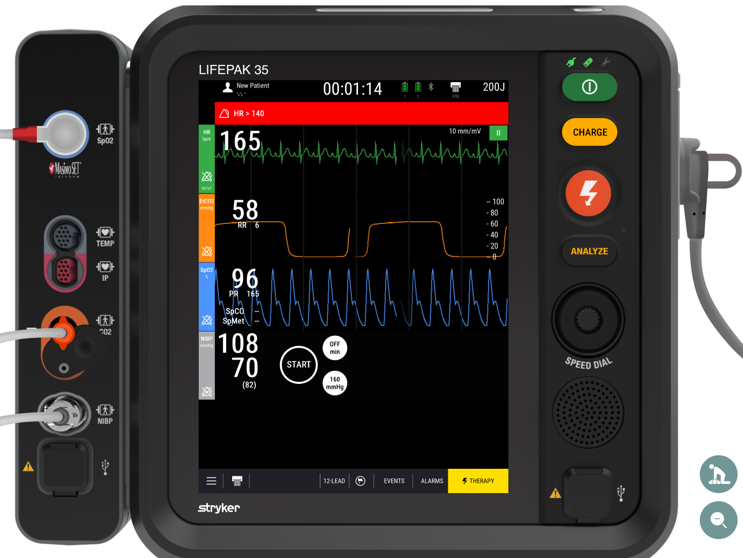
Your partner gets a pulse ox on his toe while you get the capnography cannula placed.
You point and also voice to your partner. “Fifty-eight,”
You start supplemental oxygen via blow-by first, gently, because a full mask on a postictal toddler who’s already lightly responsive can sometimes agitate more than help, and you watch his rate and his color.
“Is he going to seize again?” the father asks, standing now in the doorway, one hand pressed flat against the frame like it’s holding the house up.
“He might, febrile seizures can happen more than once with the same fever, but right now what I’m most focused on is that he’s breathing slower and shallower than he should be after a seizure like this. That’s actually really common right after one, his brain is still resetting, but I want to keep a close eye on it.” You help dad with the analogy of Tommy’s brain “rebooting”.
You check his blood glucose.

You check for any signs of trauma from the seizure, none. His temperature by touch is clearly elevated; your partner grabs a number.

Over the next two minutes you keep an eye on the monitor and Tommy’s breathing.
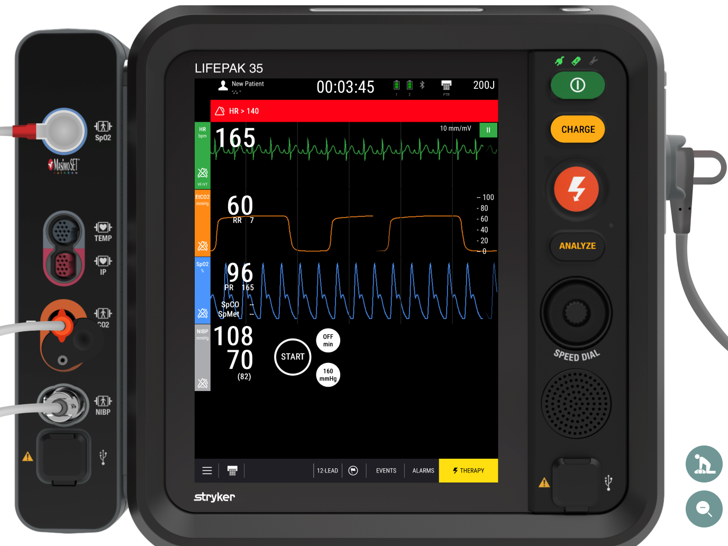
His respiratory rate stays slow, and the capnography value climbs slightly further before you note the following. twelve, then fourteen breaths per minute, spontaneously improving as the postictal fog begins to lift.
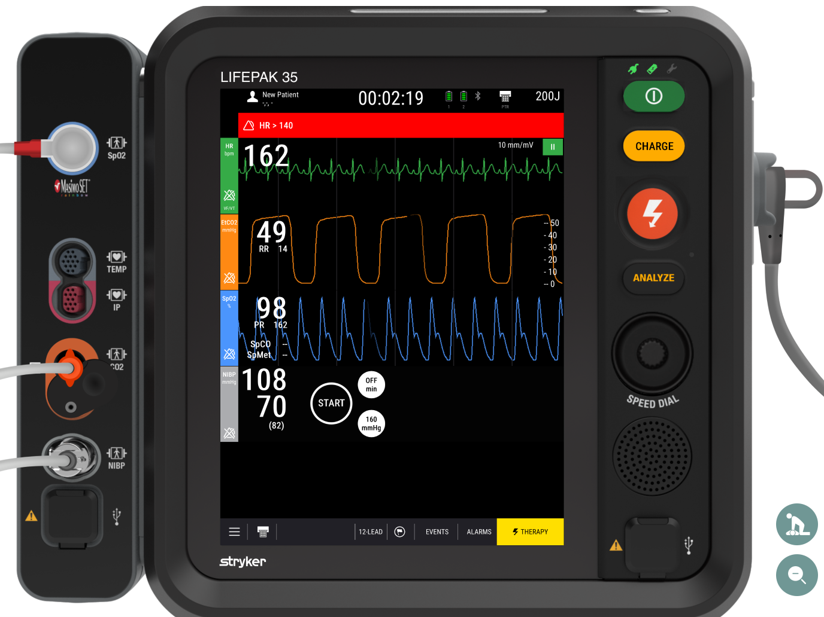
By the time you’re loading him into the truck, Tommy’s eyes flutter open. He looks at his mother, confused, starts to cry, the good, strong, lung-filling kind of cry that tells you his airway and his drive to breathe are both very much intact again.

“There he is,” the mother says, tears in her own eyes now, relief plain on her face.
You keep the cannula on for the ride.
You explain to mom trying to console her, it was never the airway or the lungs that were the problem, it was the brainstem catching its breath after the electrical storm that had just passed through it.
You hand off at the ED with a full report: seizure duration, fever history, the postictal respiratory depression you caught on the monitor, the EtCO2 trend from 58 down to normal, and the spontaneous recovery of his respiratory rate, all of which gives the pediatric team a clear picture of exactly how deep that postictal dip went and how quickly he climbed back out of it.
The Capno-Recap: The Postictal Dip, Reading the Brain Through the Breath
Tommy’s case looks, at first glance, almost identical to previous opioid overdose Friday Night Lights: normal waveform morphology, elevated EtCO2, slow respiratory rate. The shape of the problem is the same, hypoventilation, not an airway or lung issue, but the cause and the expected trajectory are completely different, and that difference changes how you manage it.
During a generalized seizure, the brain’s electrical activity is essentially hijacked, and that includes the respiratory centers in the brainstem. Afterward, in the postictal period, those centers don’t snap back to normal instantly.
Imagine your hard drive going haywire and the computer cuts off and has to reboot and slowly open back up the apps it had running before crashing. There’s a temporary depression of respiratory drive, along with a broader depression of consciousness, as the brain works through a recovery period that can last anywhere from a few minutes to, in some cases, closer to thirty.
To include during the seizure the myoclonic (muscle activity) during the event generated an increase in metabolism thus an increase in CO2 production. During the seizure the patient was likely not ventilating well if at all. Back to the postictal phase, during this window, respiratory rate and tidal volume can both be reduced, exactly the mechanism you saw with Tommy, and CO2 accumulates as a direct result.
The critical difference from an opioid overdose is trajectory and reversibility without an antidote. A healthy child’s postictal hypoventilation is expected to self-resolve as the brain continues to recover, and you saw that play out in real time: the EtCO2 climbed, then began to fall again spontaneously as his own respiratory rate picked back up, without you having to assist ventilations or give a reversal agent. That self-correcting trend is reassuring. It tells you the depression is transient and the brainstem is coming back online.
*** Increased CO2 is a vasodilator. Decreased CO2 is a vasoconstrictor. There may be benefit to slightly elevated CO2 during the post-ictal phase to allow for increased cerebral blood flow.***
What you’re watching for that would change your management entirely is a postictal dip that doesn’t self-correct, an EtCO2 that keeps climbing, a respiratory rate that doesn’t pick back up, or any decline in that trend reversing itself. That pattern would suggest either ongoing subclinical seizure activity, a structural or metabolic problem beyond a simple febrile seizure, or a postictal period that’s simply lasting longer and going deeper than expected, any of which would push you toward more aggressive airway support.
Capnography earns its keep here specifically because a sleeping looking toddler and a dangerously hypoventilating toddler can look nearly identical to the naked eye. The monitor gives you the objective trend line to know which one you’re actually looking at, and whether it’s moving in the right direction without your help.
***Street Trick #1: In a postictal pediatric patient, don’t just glance at the capnography once and move on. Watch the trend for two full minutes. A number that peaks and then comes back down on its own, as the child’s own respiratory rate recovers, is the brain waking back up. A number that keeps climbing without the rate improving is your cue to stop watching and start bagging.***


Chris Kroboth has been a career paramedic/firefighter for over 17 years and in EMS for over 23. He has been in prehospital and in-hospital education for the past 18 years. His last assignment before returning to operations was as the EMS training captain in charge of continuing education programs and certification. He is also affiliate faculty with the Virginia Commonwealth University Paramedic Program. He is the U.S. clinical education manager for iSimulate and also facilitates national conference clinical challenges to include EMS World, ENA and NTI.
