
All images created by the author.
It’s the typical warm Friday evening. You were able to grab the two extra hours because someone went home sick. You and your partner are working your way over to grab a smoothie when the CAD chirps. You are being dispatched to 3803 S. Newton St. for a lethargic four-year-old female.

You mark en route and head over there. The supplement is for a sick child at the Sunny Days Daycare Center, staff states patient is “not acting right” and “won’t wake up all the way.” You’re only about four minutes out.
You are glad to see the pickup rush has mostly cleared out by the time you get there.
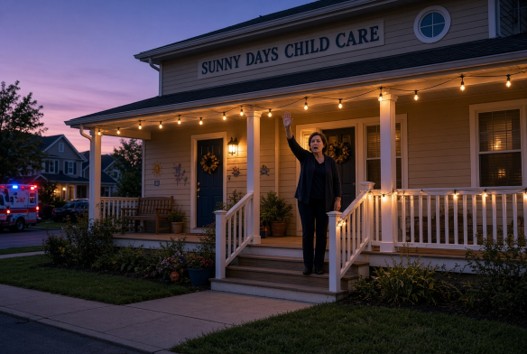
A daycare worker meets you at the door, phone still in her hand. You introduce yourself to the staff member who says her name is Karin. She walks you into the main room and you see a girl lying on the floor.
Karin says, “This is Maya, she’s four. She’s been here since seven this morning. She seemed a little warm and tired after lunch, we thought she was just sleepy, but her nap’s gone on way too long and now I can’t get her to really wake up. Her mom’s on the way, but still about 25 minutes out.”
Maya is curled on her right side, appears to be breathing fast and shallow. You crouch down, get a hand on her shoulder.
“Maya, hey sweetheart, can you open your eyes for me?”
Her eyes crack open, unfocused, and close again. She doesn’t push you away, doesn’t cry, doesn’t do much of anything, which for a four-year-old with a stranger’s hand on her shoulder is itself a finding.
You do a quick look:

Skin is warm, flushed on the cheeks, but her hands and feet, when you check them, are notably cooler and slightly mottled at the fingertips. Cap refill at the fingertip runs close to four seconds. Your partner gets her hooked up to the monitor and points to the box of life while grabbing a blood sugar:

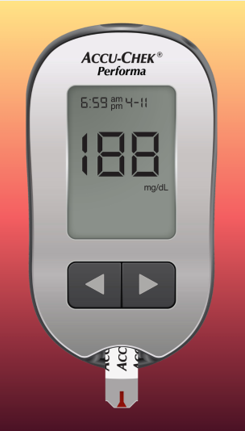
You let Karin know, “Yeah she feels really hot,”
Karin says, “Should we get a blanket, is she cold?”
You reply, “No, keep her uncovered for now, we want to see her skin. Has she had any fever today before this, any vomiting, diarrhea, anything like that?”
“She threw up once around lunch. We just figured it was something she ate.”
You get the capnography cannula on. What does this change?

You ask Karin if she can give mom a shout on the phone so you can chat with her. She agrees and gets mom on the phone quick. You introduce yourself to mom who sounds frantic. She asks “What’s wrong with her, what’s going on?”
You let her know. “She’s having some trouble with her circulation right now, her body’s fighting something, possibly an infection, and it’s making it harder for blood to get all the way out to her hands and feet, and to her brain, which is why she’s so sleepy. We’re giving her fluids to help support that, and we need to get her over to the hospital. Would it be ok with you if we met you at University?”
Mom replies, “I am pulling in, can I ride with you?”
You reassure her, “Absolutely!”
By the time you get the bolus going and Maya on the cot Mom walks over to you both with a clear tear in her eyes. You reassure mom and get Maya loaded up.
Through the first bolus you take a peak over at the monitor and find the following. Is it better, worse or the same?

Maya’s eyes open a little more fully partway through transport. She looks at you and starts to cry, a thin, weak cry, but a cry.
“There you are,” her mother says, voice cracking, holding tight to her hand.
You keep the fluids running, keep watching the trend, and head over to the pediatric emergency department at University with a full report: history from daycare staff, vomiting, prolonged lethargy, the initial perfusion findings, the fluid given, and the EtCO2 trend climbing from 18 toward 30 over the course of transport, giving the receiving team a real-time picture of a child who is starting to respond to resuscitation, not one who’s already turned the corner.
Case Recap
So, what was plaguing Maya? Was there a lot jumping out at you without the capnography waveform? Maya’s waveform doesn’t look like a failure pattern. It’s actually one that’s easy to underestimate because the shape looks normal at first glance, just “low.”
CO2 doesn’t just appear at the mouth because a patient is breathing. It has to be produced by cellular metabolism, carried through the bloodstream to the lungs, and then exhaled. Capnography measures all steps of that chain. When perfusion is compromised, as it is in early shock, whether from sepsis, dehydration, or blood loss, less blood is reaching the pulmonary capillaries per minute, which means less CO2 is being delivered to the alveoli to be exhaled.
That also means there is less oxygenated blood being delivered to the tissue to be used to metabolize. The result is a waveform that keeps something close to its normal shape (because the airway and alveoli themselves aren’t obstructed) but with an overall lower value and often a visibly shorter, flatter profile, less total CO2 showing up at the sensor breath after breath.
This is fundamentally different from the shark fin of bronchospasm or the high-value hypoventilation of an opioid overdose. Here, the lungs are trying to do their job, but there isn’t enough blood flow bringing them the CO2 to exhale in the first place.
This is exactly why capnography becomes such a valuable early trend tool in pediatric sepsis and shock, arguably before other vital signs fully declare themselves. Children compensate for shock remarkably well through tachycardia and peripheral vasoconstriction, which can keep blood pressure in a near-normal range right up until they decompensate quickly and often without much warning.
A falling or persistently low EtCO2 in a warm, tachycardic, poorly perfused child is an early, objective signal that cardiac output and tissue perfusion are inadequate, well before blood pressure crashes. And remember, what was Maya doing? Lying there doing nothing. No cardiac output, no metabolic output, and it’s low.
It is great for trending your therapies or decisions. When you push fluids and perfusion begins to improve, that number should climb, and it should climb before other signs of improvement become obvious. Maya’s EtCO2 trending upward from 18 toward 30 during your bolus was your earliest, clearest evidence that resuscitation was working, faster feedback than waiting to see her blood pressure normalize or her mental status fully clear.
***Street Trick: A low EtCO2 isn’t always a breathing problem. If the waveform looks close to normal in shape but small and flat, and the kid is tachycardic with cool or mottled extremities, think circulation, not airway. Push fluids and watch that number. A climbing EtCO2 during resuscitation is one of your earliest signs that perfusion, and the child, is coming back. If it falls, was your decision correct?***

Chris Kroboth has been a career paramedic/firefighter for over 17 years and in EMS for over 23. He has been in prehospital and in-hospital education for the past 18 years. His last assignment before returning to operations was as the EMS training captain in charge of continuing education programs and certification. He is also affiliate faculty with the Virginia Commonwealth University Paramedic Program. He is the U.S. clinical education manager for iSimulate and also facilitates national conference clinical challenges to include EMS World, ENA and NTI.
